Complete Analysis of Design and Handling of Product Parting Lines
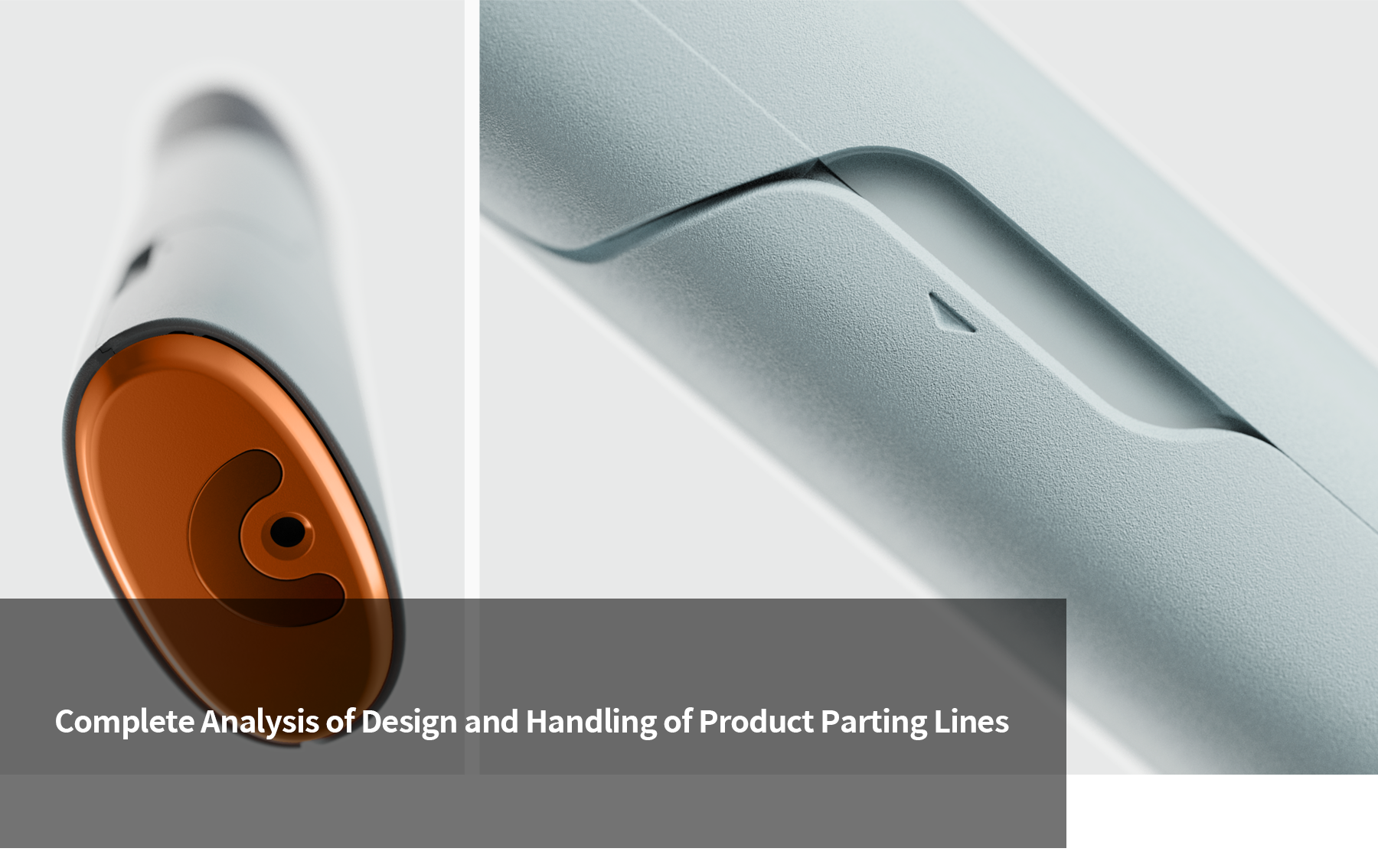
The designer spent weeks carefully crafting the sleek form and precise brand identity for the client's new product, with 3D renderings that looked stunning. However, when the first production samples arrived, an ugly, conspicuous seam ran across the entire surface, making the product look cheap. What went wrong? The culprit is often one of the most overlooked yet crucial details in product development: the parting line. While it may sound like a minor manufacturing technicality, the placement of the parting line is a strategic decision that directly impacts the perceived quality of the final product—and can even turn a high-end concept into a disappointing reality.
Outline of this issue:
· Definition and Function of Parting Lines
· Types and Distinctions of Parting Lines
· How to Optimize Parting Line Placement
(Definition and Function of Parting Lines)
The product parting line (also known as the parting line or split line) refers to the line or boundary marked in design drawings or manufacturing processes that divides the surface or structure of a product into different modules or components. The design of the parting line affects various aspects of the product's demolding, molding, cooling, and other processes. Visually, it may appear as a subtle gap, a slight raised or recessed edge, and is sometimes accompanied by minor color or gloss variations.
Functions of Parting Lines:
1.Determining Demolding Direction and Mold Structure
The parting line serves as the foundation for mold design, determining the molding direction and parting surface of the product within the mold. A well-designed parting line ensures that the product can be smoothly demolded after molding, avoiding damage or mold jamming due to demolding difficulties. This enhances production efficiency and product quality.
2.Influencing Product Aesthetic Quality
The position and shape of a parting line directly influence a product’s surface finish and visual appeal. A carefully designed parting line can be concealed in inconspicuous areas of the product (e.g., edges, chamfers) or blend naturally with the product’s form, minimizing visual obtrusiveness. Conversely, poor parting line finishing can result in obvious gaps, burrs or color differences, compromising the product’s overall tactile quality and aesthetic integrity.
3.Ensuring Product Dimensional Accuracy
The design of the parting line affects the dimensional and positional accuracy of the product. By rationally setting the parting line, the alignment precision of different mold components can be ensured, thereby guaranteeing the accuracy of product dimensions and positions during production and meeting functional and usage requirements.
4.Supporting Modular Design and Production
Parting lines enable the decomposition of a product into independent modules, facilitating parallel development and production by different teams. This modular approach not only improves development efficiency but also reduces overall project risks. If an issue arises in a specific module, it can be more easily isolated and addressed without impacting the entire product.
5.Enabling Functional Zoning and Material Differentiation
In some products, parting lines can serve as boundaries for functional zoning, clearly delineating the scope of different functional modules. Additionally, parting lines can act as division points between different materials, ensuring the smooth formation and precise alignment of diverse materials. This supports multi-material structural designs to meet various functional and performance needs.
6.Optimizing Mold Manufacturing and Maintenance
A well-designed parting line helps simplify mold structure, reducing manufacturing complexity and costs. The location and shape of the parting line also influence mold lifespan and maintenance convenience. For example, avoiding alignment of parting lines with complex mold structures or vulnerable areas can minimize wear and failure rates, extending the mold's service life.
(Types and Distinctions of Parting Lines)
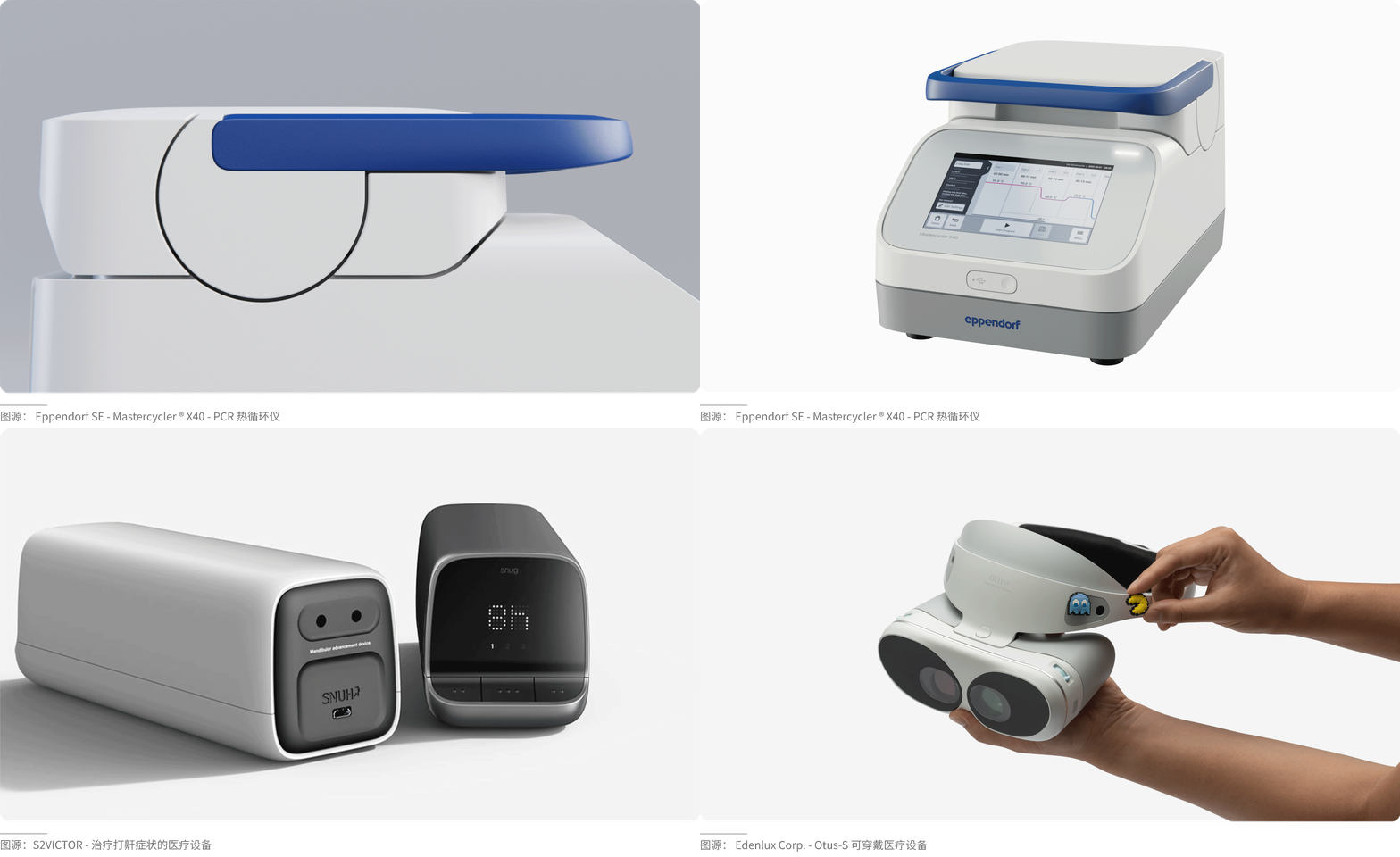
There are various types of parting lines—straight parting lines, angled parting lines, curved parting lines, and more—each uniquely impacting the final product. For instance, straight parting lines may be less noticeable but can affect how parts are ejected from the mold. Angled parting lines can help reduce flash but may require more complex mold designs. Curved parting lines may better suit organic shapes but can pose challenges in mold manufacturing. Understanding how these different types of parting lines influence a product's aesthetics, functionality, and manufacturability helps designers make informed decisions.
1. Classification by Function:
Functional Parting Lines: Lines that exist due to necessary relative movement between components for operational purposes.
Structural Parting Lines: Lines that are required based on mold design and manufacturing constraints.
Decorative Parting Lines: Visual elements added purely for aesthetic enhancement.
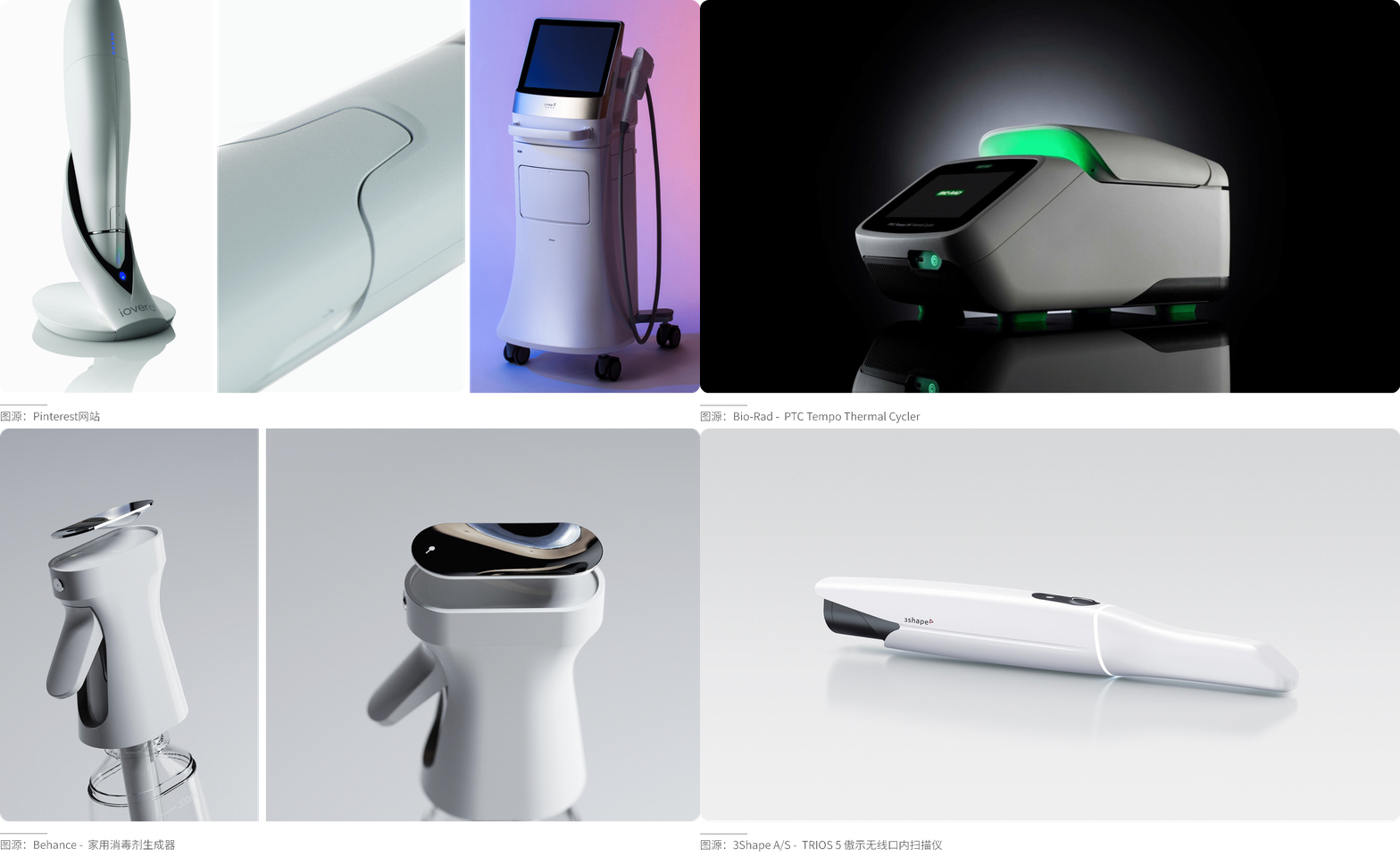
2. Classification by Form:
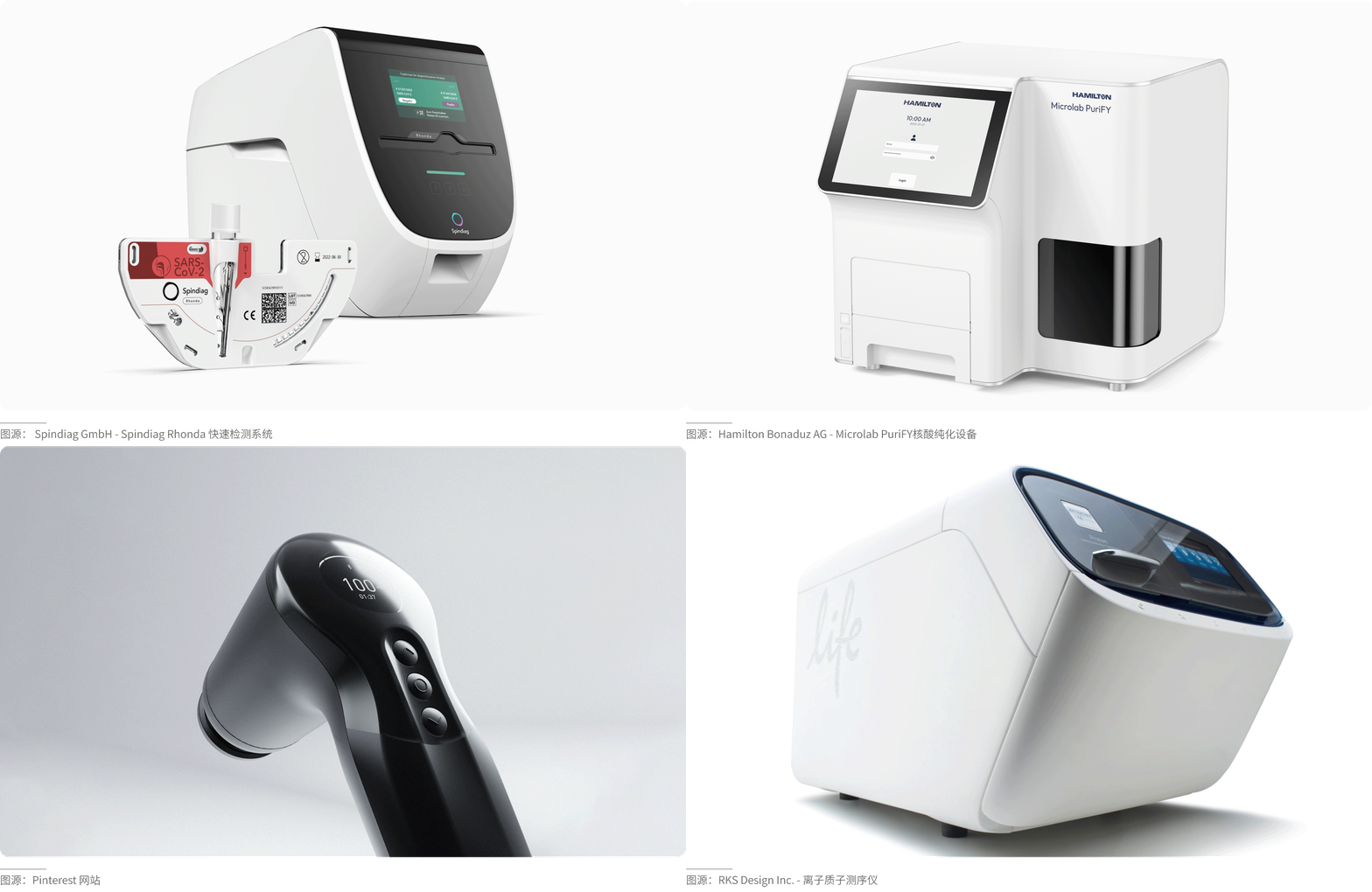
(1) Straight Parting Lines: The most common type, suitable for products with regular, symmetrical shapes. They are easy to process and manufacture, effectively reducing mold machining difficulty and costs while ensuring product precision and stability.
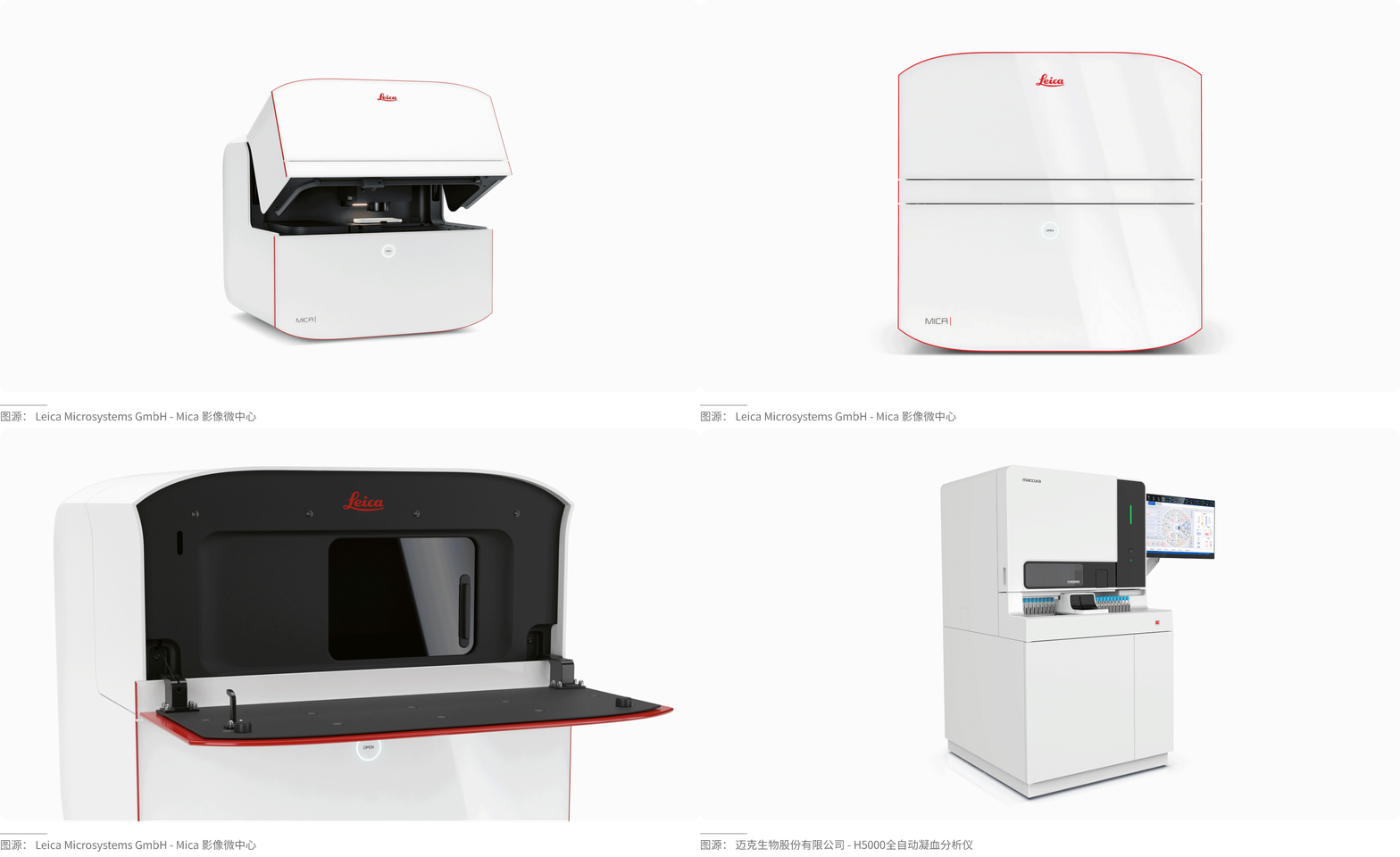
(2) Designed to follow the curved contours of a product, they are often used for medical products with streamlined or complex curved surfaces, such as respiratory masks and ergonomically designed medical device handles. Curved parting lines can make the product surface smoother and more natural, minimizing sharp edges and visual obtrusiveness.
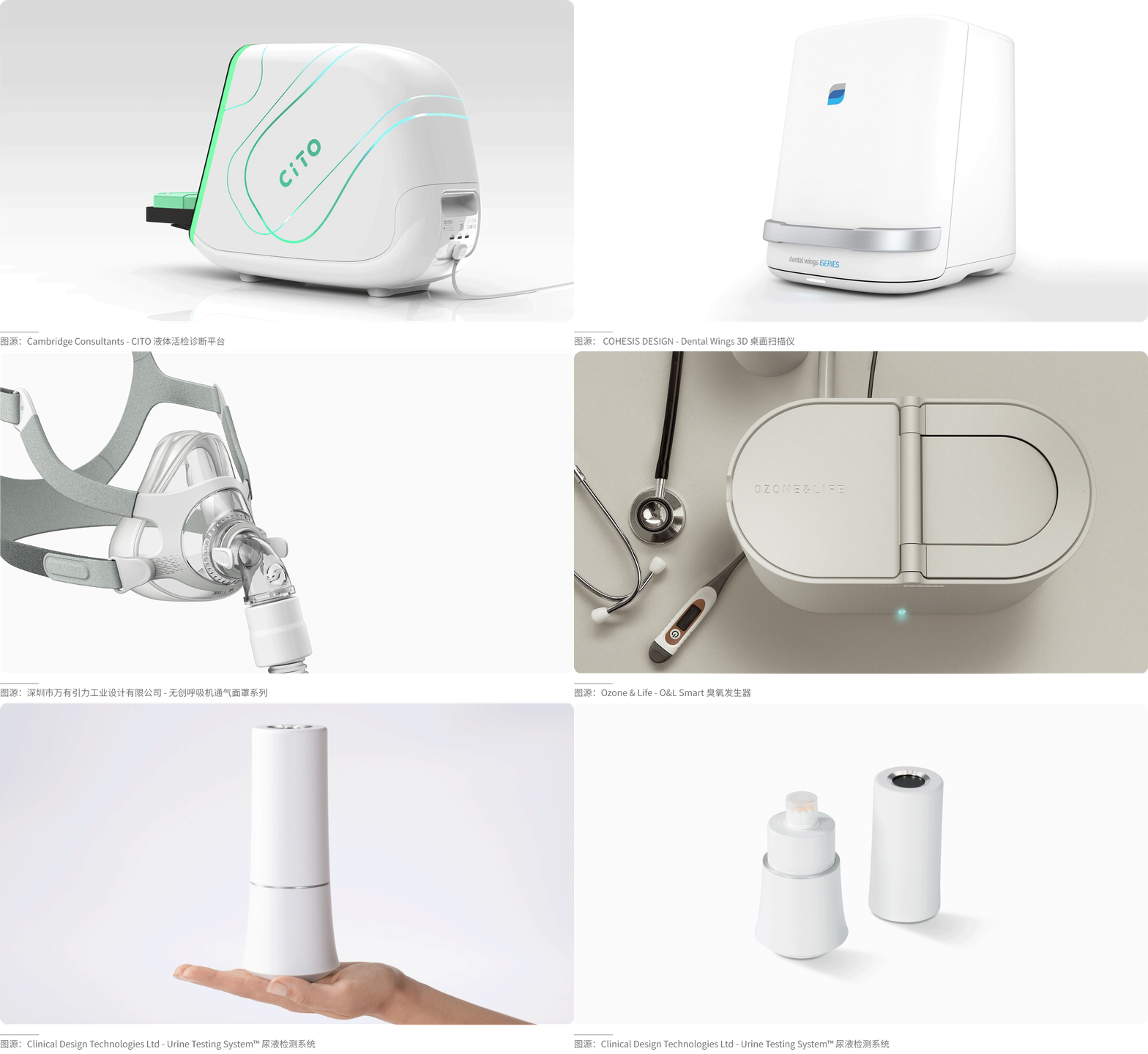
(3) T-Shaped Parting Lines: Suitable for products requiring enhanced structural stability, such as bases or brackets of certain medical devices. The unique "T" shape can improve structural strength while facilitating mold parting and demolding.

(4) Beveled Parting Lines: Designed with an inclined angle to address demolding challenges for complex-shaped products, especially those with slanted or curved surfaces. They help reduce demolding resistance and improve demolding efficiency.
3. Classification by Location:
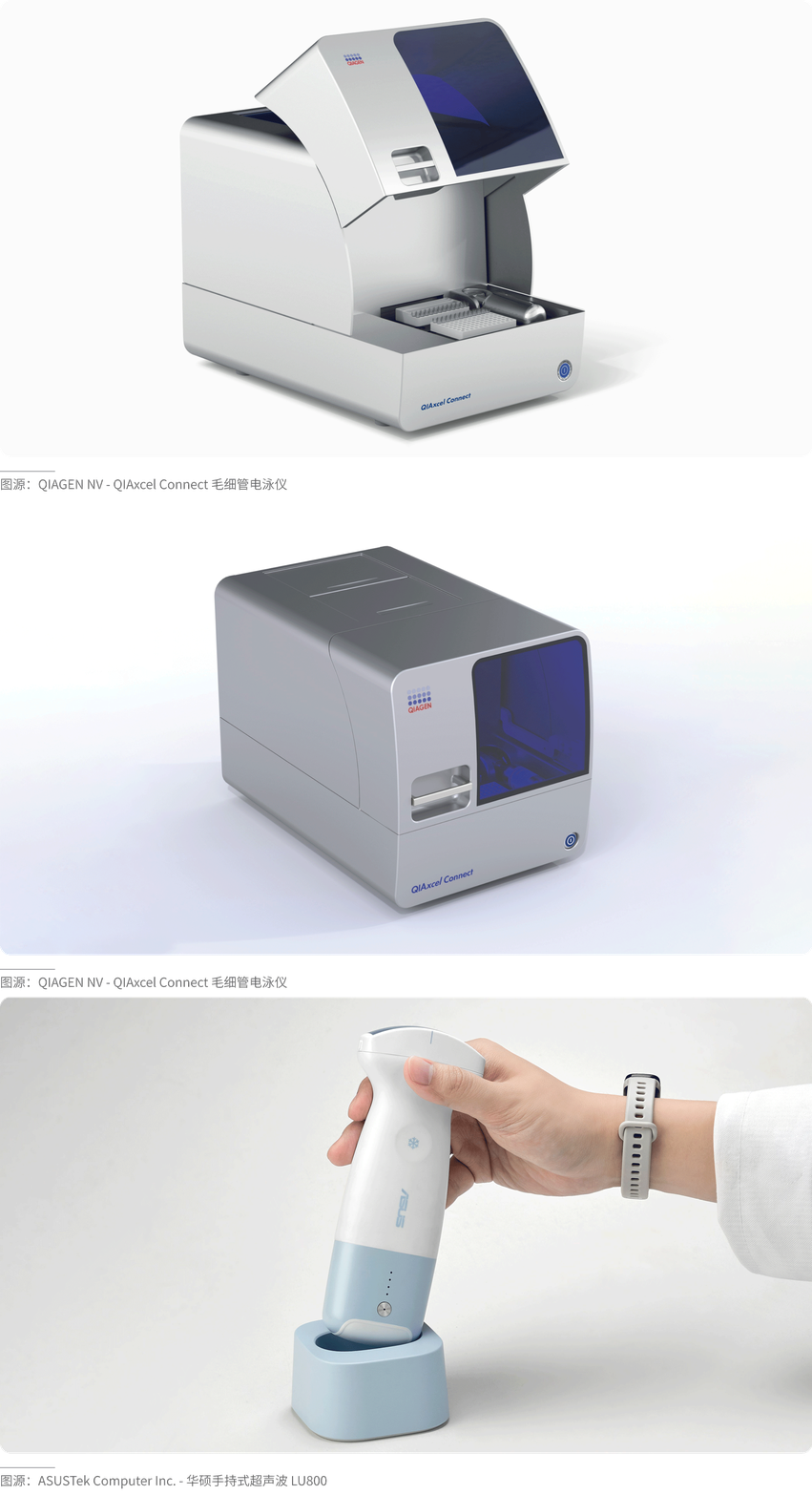
Visible Parting Lines: Located in prominent areas of the product, often intentionally emphasized.
Hidden Parting Lines: Concealed within the product structure or in visual blind spots.
(How to Optimize Parting Line Location)
For Universal Gravity Design, the appearance and tactile feel of medical products are of utmost importance. Even subtle parting lines can cause visual interference. If a parting line is located on a smooth, prominent surface, it can resemble a scar, lowering the perceived quality of the entire medical product and significantly affecting the aesthetics of the final product. Beyond impacting appearance, improperly placed parting lines can create stress concentrations, thereby compromising the structural integrity of components. It is essential to strive for a final product that is both visually appealing and durable, making it crucial to consider the location of parting lines and how they will influence the user experience.
1. Core Design Principles:
(1) Functionality First:
Load-bearing structural parting lines: Avoid stress concentration areas and incorporate reinforcing ribs (safety factor ≥1.5).
Appearance-driven parting lines: Maintain precision within ±0.1mm and ensure surface treatments match the material (e.g., mirror polishing for metal parting lines).
(2) Mold Compatibility:
Complex parting lines: Prioritize angled sliders or rotating molds and avoid deep-cavity structures (draft angle ≥3°).
Cost control: Straight or cross-cut parting lines minimize mold costs, while circular or bent parting lines require careful evaluation of machining difficulty.
(3) User Experience:
Contact area parting lines: Ensure edge fillets ≥3mm (≥5mm for children's products) with a burr rate ≤0.1%.
Visually guided parting lines: Use inclined or looped parting lines to direct attention to core functional areas (e.g., operation buttons, display screens).
(4) Brand Narrative:
Signature parting lines: Maintain brand consistency (e.g., the T-shaped parting line used consistently across a brand's product series).
Hidden parting lines: Conceal through material transitions (e.g., glass-to-metal parting lines with an error margin ≤0.03mm).
2. Practical Design Strategies
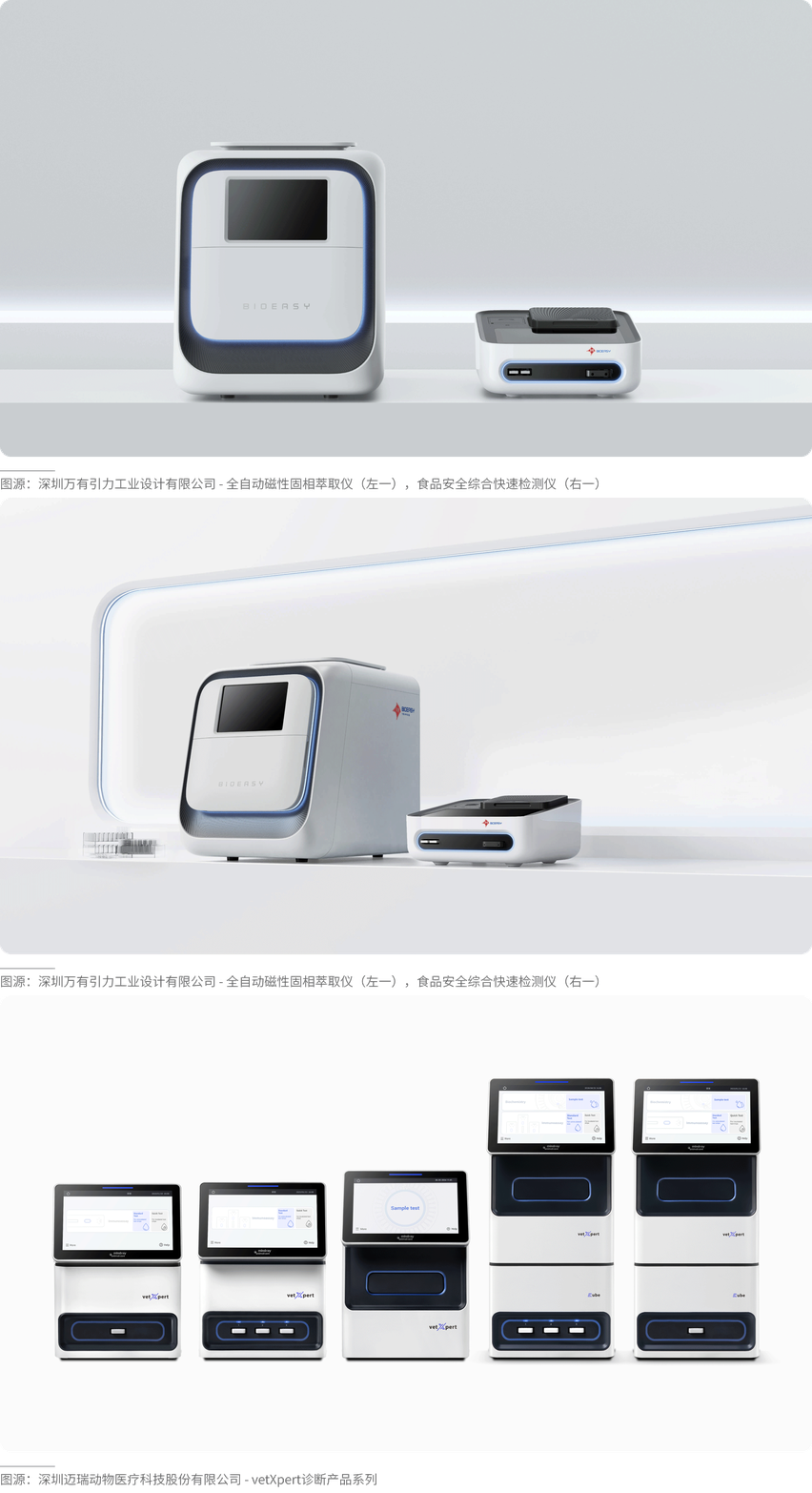
"Concealment": Hide the parting line in visual blind spots, structural transitions, or align it with decorative lines.Place in Visually Weaker Zones: Position the parting line in inconspicuous areas such as the bottom, sides, or back of the product.Align with Feature Lines: Allow the parting line to coincide with the product's own styling lines, edges, or color band separators. In this way, it no longer appears as an unnecessary line but rather as an integral part of enhancing the design.
"Revealment": Deliberately emphasize the parting line, making it a part of the design feature.Pursue Precision and Consistency: Ensure the parting line is clear, sharp, uniform, and free from misalignment and burrs through high-precision mold manufacturing, highlighting its role as a visual focal point.Design as a Decorative Feature: Actively design the parting line to serve as a meaningful decorative line.
"Integration": Combine the parting line with functional elements, such as merging it with opening/closing positions, button slots, interfaces, or indicator lights.For Removable Structures: In areas requiring access, the parting line itself can function as the opening seam.Define Button Zones: Buttons often require separate molds, and the parting line can enhance the visual effect of the button area.Serve as Grip Texture or Holding Area: On tool handles or similar parts, a distinct parting line can add tactile variation and provide better grip feedback.Enhance Lighting Effects: Similar to buttons, the installation of lighting elements often requires independent molds. A well-designed parting line can amplify lighting effects.
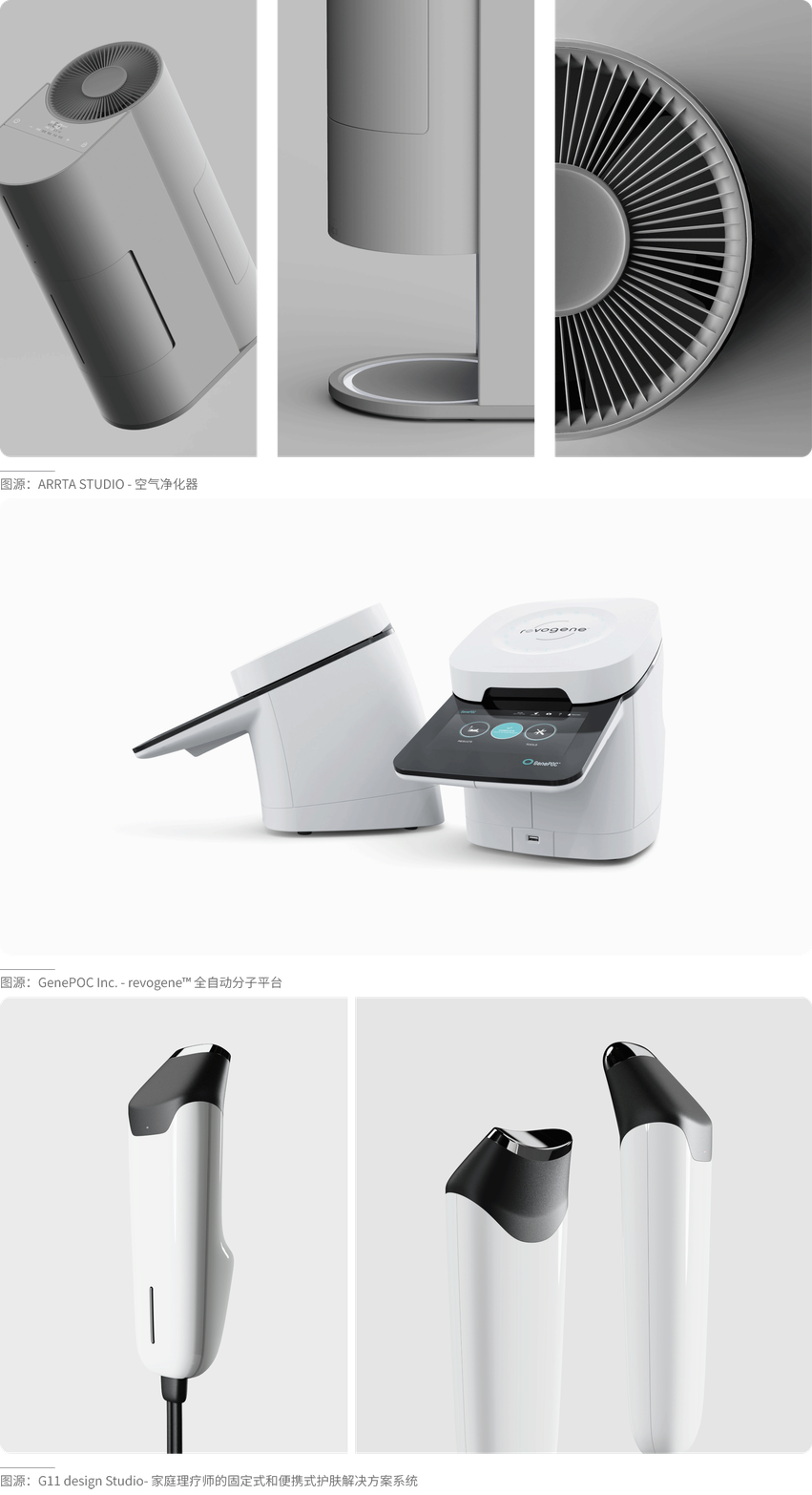
Parting lines do not always need to be hidden; sometimes, they can become highlights of the design:
(1) Function-Oriented Form: Integrate the parting line with product functionality. For example, the parting line of an oxygen concentrator’s water tank often aligns with its assembly seam, indicating to users how to open the product.
(2) Aesthetics-Oriented Form: Use parting lines to create a visual sense of rhythm. For instance, some home medical products use parting lines to delineate surfaces with different textures, adding a sense of depth.
(3) Semantics-Oriented Form: Convey design philosophy through parting lines. For example, a flowing curved parting line may suggest the product’s softness and approachability.
(Conclusion)
In medical product design, parting lines serve as the product's "invisible skeleton"—unassuming yet supporting every functional and experiential detail. As a professional industrial design team, Universal Gravity Design is dedicated to transforming such seemingly technical details into design opportunities that enhance the professionalism, safety, and human-centered care of medical products.We believe that exceptional design resides in every detail—even a subtle parting line embodies a profound understanding of user needs and a deep respect for manufacturing processes. This is precisely the core value we bring to design services in the medical field: finding the most appropriate and elegant balance between science and aesthetics, between engineering and experience.
Thank you for reading—stay tuned for more insights in our next update!